The U.S. confirmed Monday that it has weapons deployed in space.
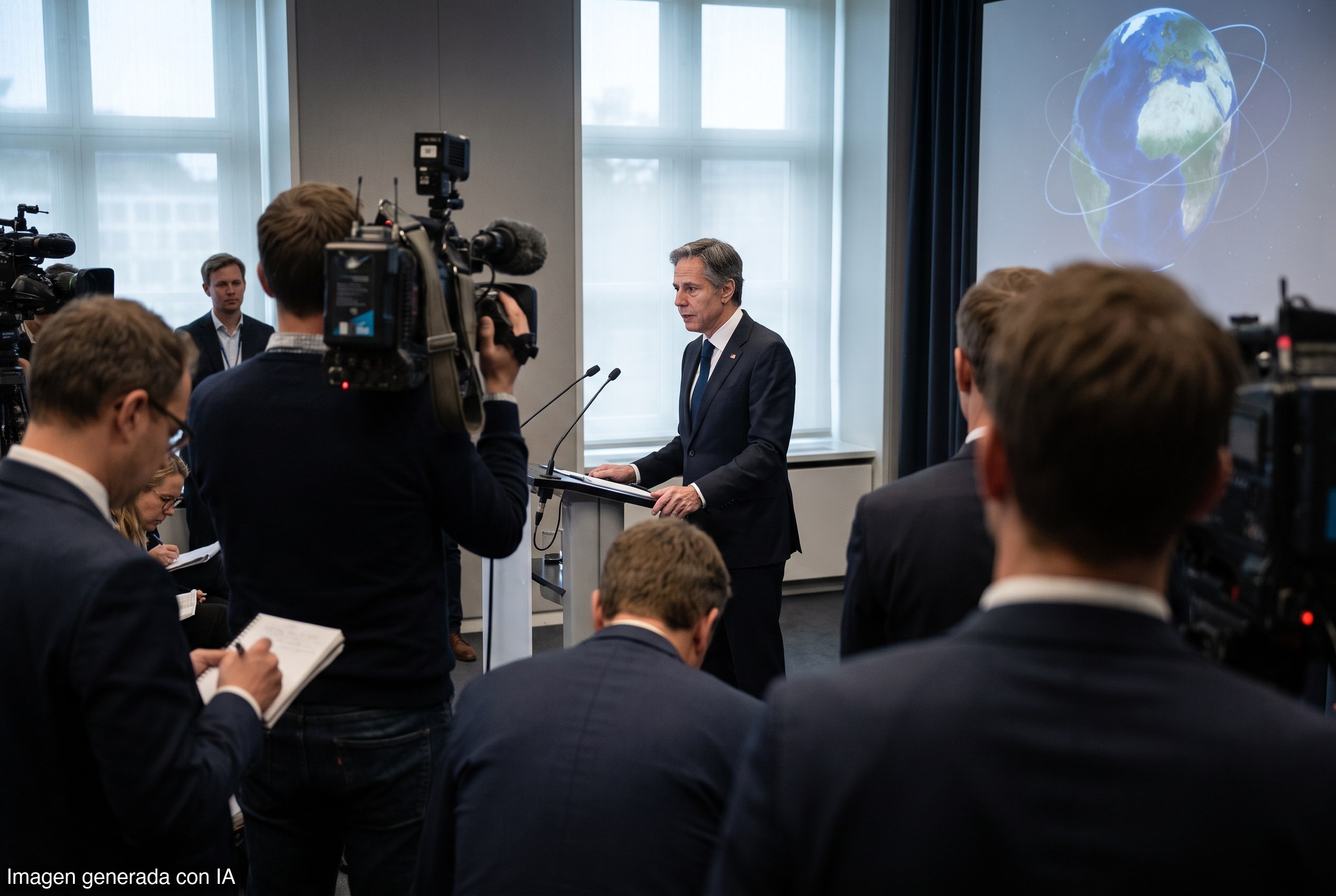
Air Force Secretary Troy Meink told the Air and Space Cyber Conference that the U.S. has 'on-orbit space control weapons' and said they are capable of defending the joint force against 'hostile adversary action.' He did not say what kind of weapons they are, how many are in orbit, or when they were deployed.
The acknowledgment is the first public confirmation from a U.S. official that the Space Force has deployed weapons in orbit. Meink said the move is tied to a more dangerous threat environment and to efforts to modernize the Air Force and Space Force in response to adversaries, AI, and the growing use of autonomous weapons.
'It is critically important that we maintain our dominance not only in the air, but in space,' Meink said, adding that the U.S. has had to take steps so it can respond when threatened. In a separate remark, he said the service plans to 'dramatically increase' combat power by adding large numbers of highly autonomous systems and expects a 'radically different-looking Air Force by 2032.'
Meink would not discuss the details of the weapons or why the announcement came now. He also declined to say whether they had been tested. Military Times said the announcement is the most direct public acknowledgment by a U.S. official to date regarding space control weapons.
The reaction was predictable. Juliana Suess, an expert in space security at the German Institute of International and Security Affairs, said the disclosure could prompt Russia and China to respond diplomatically by accusing the U.S. of militarizing space and preparing for conflict. Victoria Samson of the Secure World Foundation called the statement 'very destabilizing.'
China’s Foreign Ministry spokesperson Guo Jiakun said China 'opposes any arms race in outer space' and urged the U.S. to stop expanding military buildup in outer space. The Pentagon and U.S. Space Force did not immediately respond to requests for comment.
Here's the thing: once the U.S. says it has weapons in orbit, the debate stops being theoretical. This is no longer about abstract deterrence or policy papers. It is about a new layer of military power sitting above the planet, funded by taxpayers and justified as a necessity because rivals are doing the same thing.
That may be enough for the national security crowd. But it also means more money flowing into the permanent defense apparatus, more secrecy around the platform, and more incentives for every major power to keep escalating the game. The demo is not the product. In space, the product is escalation.