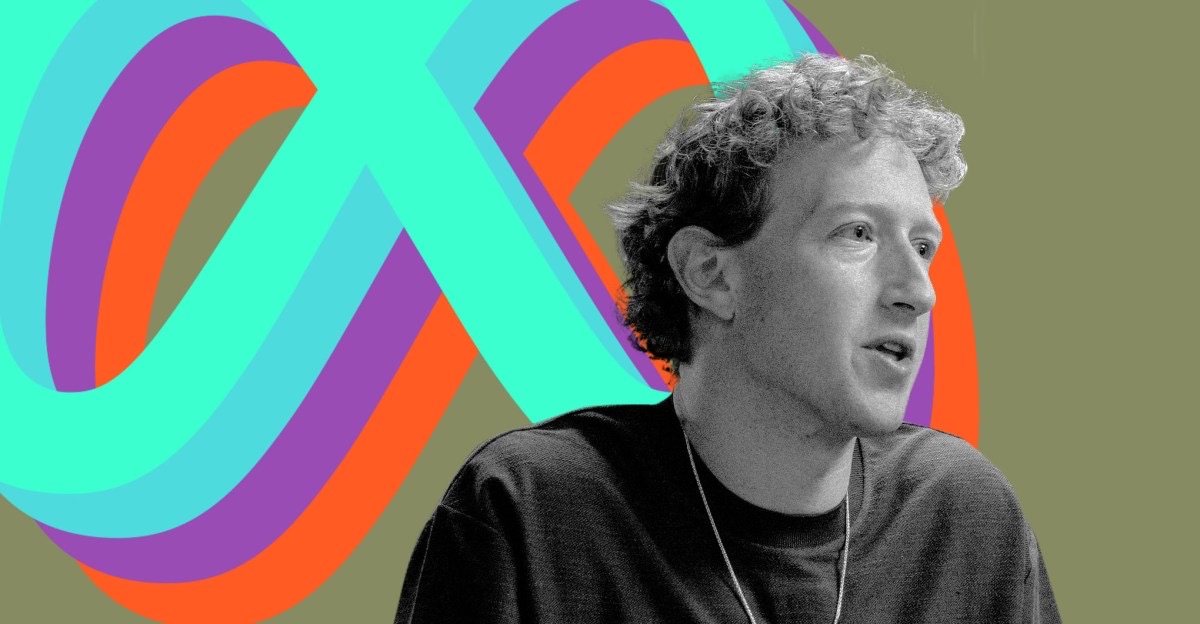
Here's the thing: when a tech CEO publishes more than 6,500 words on a Monday, he's not writing for you. He's writing for regulators, rivals, and the historical record. Mark Zuckerberg's new essay, titled 'The Future is for Everyone,' does all three at once.
The manifesto, published this week, lays out three organizing principles: individual empowerment as 'the source of prosperity,' invention as 'the primary purpose of superintelligence,' and a balance of power as 'the foundation of safety.' That last one is doing a lot of work. Zuckerberg argues that no single AI system should accumulate a decisive advantage in computing power — a framing that conveniently positions Meta's open-source distribution strategy as a geopolitical safety feature rather than a business decision.
On the economic anxiety front, Zuckerberg is dismissive of the doom loop. 'I do not understand why anyone who believes that AI will eliminate most jobs and much of humanity's relevance would rush to build that future,' he wrote. He predicts the rise of roles like 'one-person product studios' and 'world builders and experience designers,' and argues that smaller companies will multiply even as headcounts shrink. Whether that math holds is a different conversation, but he's at least asking the right question about who the pessimists are actually building for.
The essay also doubles as a community-relations document. Zuckerberg points to Richland Parish, Louisiana — where Meta is building a data center — and notes that increased tax revenue allowed teachers there to receive a $50,000 bonus this year. Meta is also launching a 'Future Is For Everyone Fund,' pledging to build energy-generating infrastructure wherever it invests, and committing to restore 200% of water used in high-stress regions by 2030.
On policy, Zuckerberg takes direct aim at restrictions on distillation — the process of prompting one AI model to learn from another. 'Some have tried to frame distillation as harmful,' he wrote, 'but I think it is important to protect the principle that you can learn from anything you can observe.' He also proposes that frontier AI labs share intermediate training checkpoints with the U.S. government for security review, an arrangement he says aligns with the Trump administration's AI testing framework.
The essay arrived alongside Meta's release of an open-source version of its most advanced AI model, according to Variety, weeks after it released a previous model. Meta also says it will 'resume releasing some open source models soon' now that Meta Superintelligence Labs is operational, and is introducing a governance structure giving its independent board authority to approve safety criteria for model releases.
Voltage's read: The manifesto is a well-timed offensive. With Sen. Bernie Sanders calling for a pause on AI development and Anthropic's Amodei publicly distancing himself from open-model advocacy, Zuckerberg is planting a flag: open access, distributed power, and government partnership on his terms. That is a genuinely pro-market, pro-individual framework — and it happens to be the one that benefits Meta most. The two things are not mutually exclusive. Free-market readers should welcome the competition it implies; they should also read the changelog carefully before trusting the roadmap.