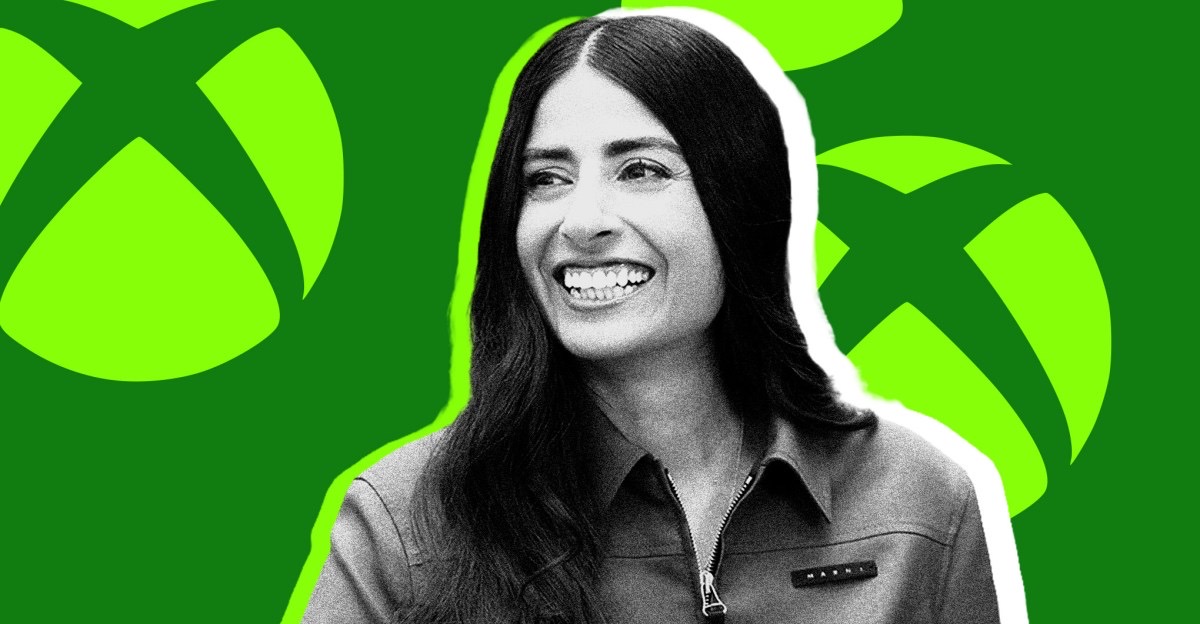
Xbox CEO Asha Sharma told BBC News at gamescom 2026 that Project Helix — the codename she introduced in March as Microsoft's 'next generation console' — is actually a 'family of devices.'
'We've been hard at work on a great next generation and a great family of devices for Helix, and we'll share more soon,' Sharma said.
That clears up a question nobody quite asked back in March, when the singular phrasing implied one box under the TV. Now it's apparently a lineup, and Microsoft still hasn't said how many devices, what they look like, or what any of them cost.
Sharma gave that answer after being asked whether Helix will ditch discs entirely. She didn't answer that one. The closest thing to a response: Microsoft this week rolled out a program for digitizing physical games, which reads like a hedge in either direction.
The 'family' framing lines up with a 2025 deal Microsoft struck with AMD, described at the time as a 'strategic multi-year partnership' covering 'a portfolio of devices,' including the next-gen Xbox. It also matches long-running rumors that third parties could sell their own Helix hardware — rumors Xbox VP of next generation Jason Ronald didn't exactly kill when he wrote that 'Project Helix will be available as a 1st party Xbox console.' That's a carefully worded sentence. It leaves the door open for third-party ones too.
On timeline, there isn't one yet. AMD hinted in February it would be ready to support a 2027 Xbox launch. Ronald said in March that Helix wouldn't reach alpha until 2027. A separate report says developers are now expected to get alpha units starting next year. Sharma reiterated that Helix will play both console and PC games, though whether that applies to every device in the 'family' is still unclear.
Context helps explain the timing. Sony announced last month that PlayStation is going fully digital, dropping disc-based games by 2028. Xbox declining to confirm or deny its own disc plans right after that isn't a coincidence; it's a company watching a rival make a call and choosing not to make one of its own in public.
None of this is a product yet. It's a codename, a partnership, a VP's carefully worded blog post, and a CEO promising to 'share more soon' — the same phrase companies reach for when the roadmap isn't finished but the marketing calendar is. A 'family of devices' sounds like ambition. It could just as easily mean Microsoft hasn't settled on one design and would rather announce a philosophy than a spec sheet.
For buyers, the practical upshot is that there is still no price, no confirmed hardware, and no firm date — just 2027 whispered by two different executives at two different companies. The demo, whenever it shows up, is not the product. Read the changelog when Microsoft actually writes one.