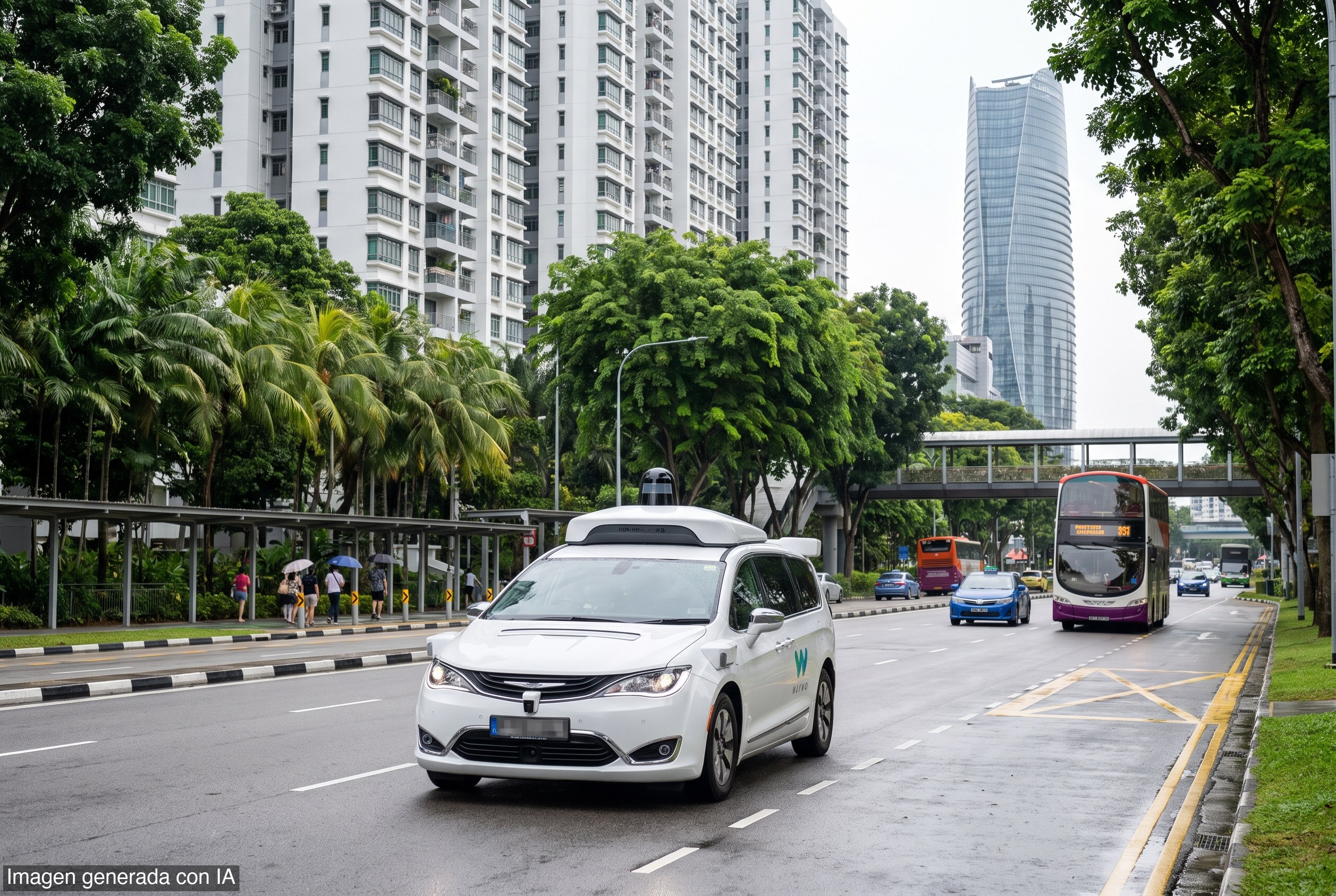
Waymo says Singapore will be its next international robotaxi city, with a commercial launch targeted for 2028.
The Alphabet-owned company said its vehicles will start arriving in the coming months. In 2027, Waymo plans to begin mapping and autonomous testing in Singapore with human safety drivers behind the wheel. The company says it is working toward offering fully autonomous ride-hailing to the public by 2028.
Singapore’s Land Transport Authority still has to approve the service before Waymo can accept passengers. The city-state requires all autonomous vehicles to undergo a safety assessment at the Centre of Excellence for Testing and Research, or CETRAN, before deployment on public roads. The tests were developed by the LTA and CETRAN, with input from the Traffic Police.
Waymo is not starting from zero. It established a corporate entity in Singapore earlier this year and already participates in the country’s Steering Committee on Autonomous Vehicles. The company also says Singapore is a place where autonomous vehicle testing is already active, with authorities green-lighting autonomous freight delivery, road-sweepers, and self-driving buses for airport workers. Motional, a US-based company majority owned by Hyundai, also ran a robotaxi pilot there in 2016.
The Singapore move fits Waymo’s broader overseas roadmap. The company has also said it plans to launch a robotaxi service in London by the end of 2026, Tokyo in 2027, and Munich in late 2027, which would be its first expansion in the European Union. Waymo says it has around 4,000 vehicles operating in about 15 US cities, and it has announced new domestic markets this year, including Nashville, Denver, San Diego, and Las Vegas.
Here's the thing: this is what expansion looks like when the platform runs into the real world. Waymo can ship the hardware, map the streets, and tout the algorithm, but it still needs permission to carry passengers. The administrative state is not an afterthought here; it is the gatekeeper.
For a company built on automation, that is the entire story. The promise is speed and scale. The constraint is regulation, safety review, and political tolerance. Waymo is clearly betting that overseas markets will be less clogged than some major US cities. Whether that becomes a business advantage or just another long regulatory crawl is the part that still has to ship.