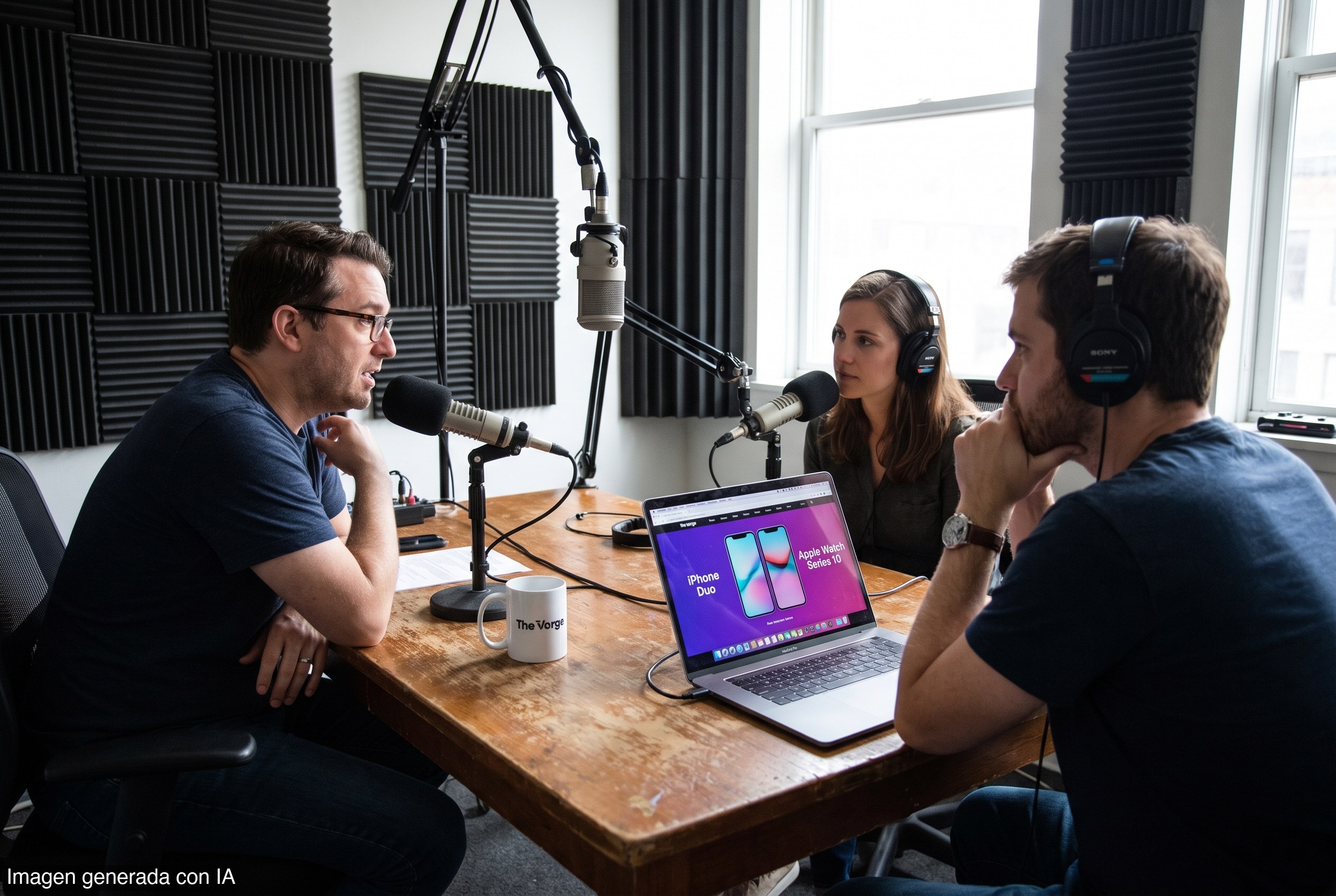
On today’s Vergecast, Jacob Kastrenakes says the team is digging into Apple’s launch event, including how John Ternus did in his first appearance as CEO and what Apple’s new AI features on the Apple Watch could mean.
Allison Johnson joins to discuss the new iPhones, which she had a chance to test in Cupertino. Kastrenakes says both he and Johnson have questions about the new variable aperture camera on the iPhone 18 Pro, including whether the real upgrade is the wider aperture rather than the ability to stop it down.
The episode also spends time on the iPhone Duo. Kastrenakes says the discussion focuses on how Apple decided to pick and choose the best parts of Android foldables.
Victoria Song then joins to talk through the new Apple Watches, which she also had a chance to test. The show digs into the new sensor array and whether it enables legitimately new metrics or just more vibesy health data.
One of the bigger topics is Apple’s new microphone feature on both watches. Kastrenakes says Apple added the ability for both new Apple Watches to have an always-on microphone that summarizes all of your conversations.
From there, the episode shifts to a special segment with Nilay Patel and David Imel, who speak with AI researcher CJ Trowbridge about the state of running local LLMs on the Mac.
Finally, the Thunder Round returns after a long wait, with the team racing through stories so Allison can make it to the airport. That includes OpenAI math drama, digital ocarinas, and more.
The bigger picture is simple: Apple is pushing deeper into hardware features that blur the line between device and assistant. That is the kind of move the platform loves to frame as convenience, while users have to decide how much of their conversations, health data, and compute they want inside one more tightly managed walled garden.
And on the Mac side, local LLMs remain the other story worth watching. The promise is obvious: more capability on-device, less dependence on somebody else’s cloud. The catch is that every new layer of intelligence also adds another reason to care about who controls the roadmap, the hardware, and the rules of access.